


After treating damp, many homeowners are unsure when they can safely replaster their walls. Plaster that looks dry on the surface can still hold significant moisture underneath, and plastering too early can trap moisture, damage finishes and even cause damp to return. This guide explains how long you should wait, what to check and how to ensure your replastering lasts.
Why replastering after damp treatment matters
Treating rising damp, penetrating damp or condensation often involves removing damaged plaster and allowing the wall to dry. Old plaster becomes hygroscopic, meaning it draws salts and moisture to the surface. If you replaster before the wall has stabilised, those salts can migrate through new plaster and cause staining, blistering or mould.
Correct replastering is therefore a crucial final step in any damp-proofing project, ensuring the wall remains dry, breathable and stable for years to come.
How long should you wait before replastering?
There is no single drying time for treated walls, because different types of damp behave differently. As a general guide:
- Rising damp: Walls may need 4–8 weeks or more to reach a stable moisture level, depending on the thickness of the wall and environmental conditions.
- Penetrating damp: Once the source of water ingress is repaired, drying often takes 2–4 weeks.
- Condensation-related damp: Once ventilation is improved, walls typically dry faster, sometimes within 1–2 weeks.
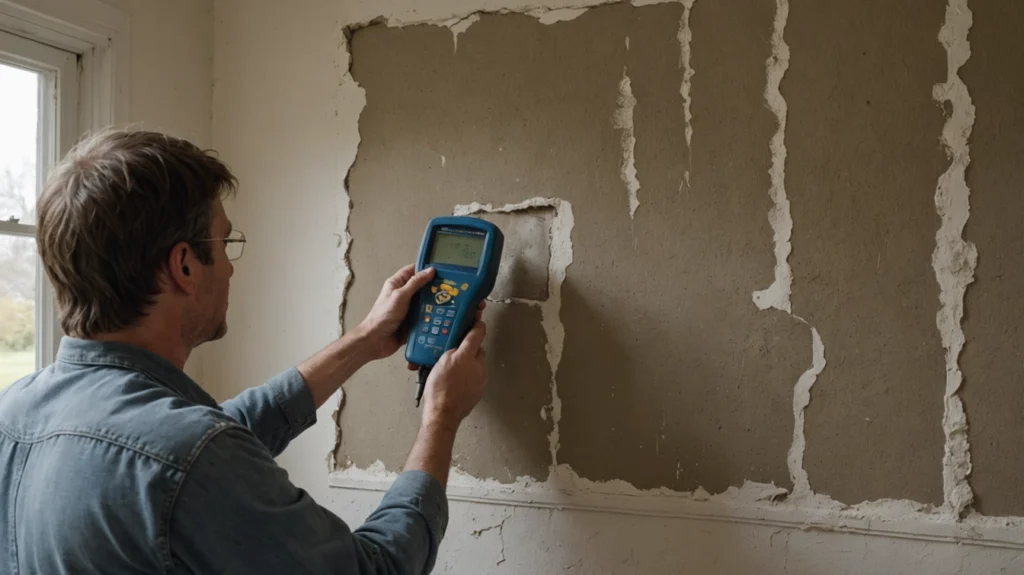
Your damp specialist should take moisture readings to confirm when the wall is ready for new plaster. Surface dryness alone is not reliable.
How to check if the wall is ready
Before any replastering begins, a trained technician will usually check three key factors:
- Moisture readings: Using an electronic moisture meter or carbide test to confirm dryness below the surface.
- Salt contamination: Identifying any brown staining or white crystalline deposits that require a salt-resistant plaster system.
- Humidity and temperature: Ensuring the room conditions allow successful curing of new plaster.
If any moisture remains, you must continue drying before plastering to avoid future issues.
What type of plaster should be used after damp treatment?
After treatment for rising or penetrating damp, it is common to use a specialist plaster system designed to block salts and manage moisture movement. These include:
- Waterproof render base coats combined with a breathable finish.
- Pre-bagged renovation plasters designed for damp-proofing applications.
- Membrane systems such as studded damp-proof membranes with plasterboard finishes.
Your installer will choose the most appropriate method based on the wall condition and the type of damp.
What happens if you replaster too early?
Replastering before the wall has fully dried can lead to:
- Staining or salt migration through new plaster
- Peeling paint and bubbling plaster
- Visible damp patches returning
- Mould growth caused by trapped moisture
- Reduced lifespan of the damp-proof treatment
If these issues occur, the new plaster may need to be removed and the process repeated, adding avoidable cost and disruption.
Do you need to replaster the whole wall?
In many cases, only the lower section of the wall is affected. However, if salt damage has spread higher or if moisture readings remain inconsistent, a larger area may require removal. Your damp surveyor will advise after inspection.
Go2’s plastering guidance
If you would like to learn more about when walls should be replastered in general—not just after damp treatment—see Go2’s detailed guide here: When to Replaster Walls.
Why choose Go2 for damp and replastering work?
Go2 Property Services provides integrated damp-proofing, plastering, insulation and property restoration across Surrey, London and Berkshire. Our approach ensures walls are fully dried, treated and correctly replastered, preventing future failure and giving homeowners long-term peace of mind.
To arrange a damp survey or discuss replastering options, visit our contact page: Contact Go2 Property Services.