


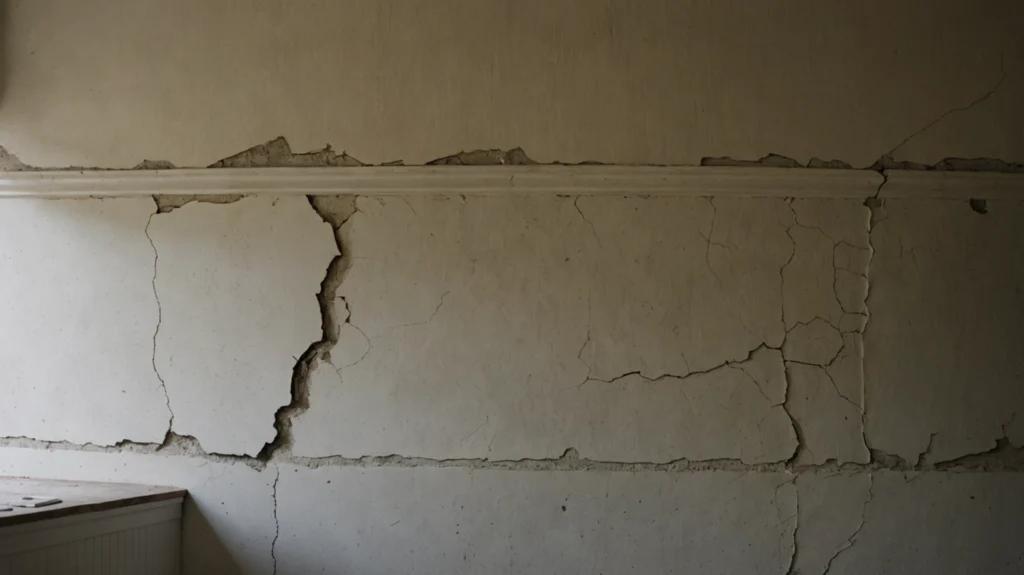
Many homeowners notice cracked, uneven or damaged plaster and immediately assume that full replastering is unavoidable. In reality, that is not always the case. I have visited plenty of homes where small repairs were enough to stabilise walls and prepare them for decoration, saving time, disruption and cost. The key question most people ask is simple: do I need replastering, or can the damage be repaired instead?
This guide explains how to tell the difference, what typically causes plaster to fail, and when investing in full replastering is the sensible long-term option.
Why plaster deteriorates over time
Plaster is durable, but it is not permanent. Over the years, normal building movement, moisture, temperature changes and previous repairs all take their toll. Older properties across Surrey often have layers of historic plaster applied over different substrates, which can respond differently to movement and humidity.
Common causes of plaster damage include:
- Natural settlement and minor structural movement
- Moisture from condensation or historic damp issues
- Poor-quality or rushed past repairs
- Impact damage and repeated redecorating
- Age-related breakdown of lime or gypsum plaster
Understanding the cause is essential before deciding whether repair or replastering is appropriate.
When plaster repairs are usually enough
In many homes, plaster damage is localised rather than widespread. In these cases, targeted repairs can restore the surface effectively without removing sound material.
Repairs are often suitable when:
- Cracks are fine and stable rather than spreading
- The plaster remains firm and well bonded to the wall
- Damage is limited to small areas around openings or corners
- There is no ongoing moisture or damp issue
Professional repairs typically involve cutting out loose material, stabilising the background and blending new plaster seamlessly into the existing surface. When done correctly, repaired areas can be indistinguishable once decorated.
Signs that full replastering is unavoidable
There are situations where repairs become a false economy. If plaster has failed across large areas or continues to deteriorate, full replastering is often the only reliable solution.
You are more likely to need replastering if:
- Plaster sounds hollow or drummy across wide sections of wall
- Large areas are blown, friable or powdery
- Cracks keep returning after previous repairs
- Walls are uneven due to multiple historic patch repairs
- Plaster has been damaged by damp or salts
In these cases, skimming over the surface rarely lasts. Removing failed plaster and starting again creates a stable base for long-term decoration.
Plaster damage and damp: what must be checked first
If plaster damage is linked to moisture, replastering should never be rushed. Damp must be identified and resolved before any internal finishes are renewed. Otherwise, even high-quality plaster will fail again.
Common moisture-related causes include condensation, penetrating damp and historic low-level damp. If you are unsure, it is worth reviewing the warning signs here: Signs of damp in a house.
Guidance on timing is also important. This explains when it is safe to replaster after moisture issues: When should you replaster after damp?.
Repair versus replastering: cost and disruption
Cost is often the deciding factor for homeowners asking “do I need replastering?”. Repairs are usually quicker, cheaper and far less disruptive. Full replastering takes longer, involves more preparation and generates more dust, but it delivers a uniform, durable finish.
As a general guide, patch repairs may cost a few hundred pounds depending on size, while full replastering of a room is a larger investment. Independent consumer guidance on plastering costs can be found here: plastering cost guide.
Choosing the right option is about balancing short-term savings against long-term reliability.
The value of professional assessment
The most effective way to decide whether you need replastering is a professional inspection. An experienced plasterer can assess adhesion, moisture risk and background condition, then recommend the most proportionate solution.
This avoids unnecessary work while ensuring that any repairs or replastering last. In some cases, the advice may be to repair now and plan further work later. In others, full replastering is the most cost-effective option over time.
You can learn more about the service here: Plastering.
Conclusion
Replastering is not always necessary, but neither should plaster damage be ignored. The right approach depends on the extent of the damage, the condition of the background and whether moisture is involved.
By understanding the difference between repairable plaster and widespread failure, homeowners can make informed decisions, avoid repeated repairs and achieve a finish that lasts. If you are unsure whether repairs will suffice or full replastering is required, professional advice will give you clarity and confidence before you redecorate. Contact us today.
FAQs
Do I need replastering for hairline cracks?
No. Hairline cracks are often cosmetic and can usually be repaired if the plaster is otherwise sound.
Can plaster be repaired after damp?
Yes, but only once the damp issue has been resolved and the wall has dried properly.
Is replastering worth the cost?
When plaster has failed across large areas, replastering provides a long-term solution that repeated repairs cannot match.