


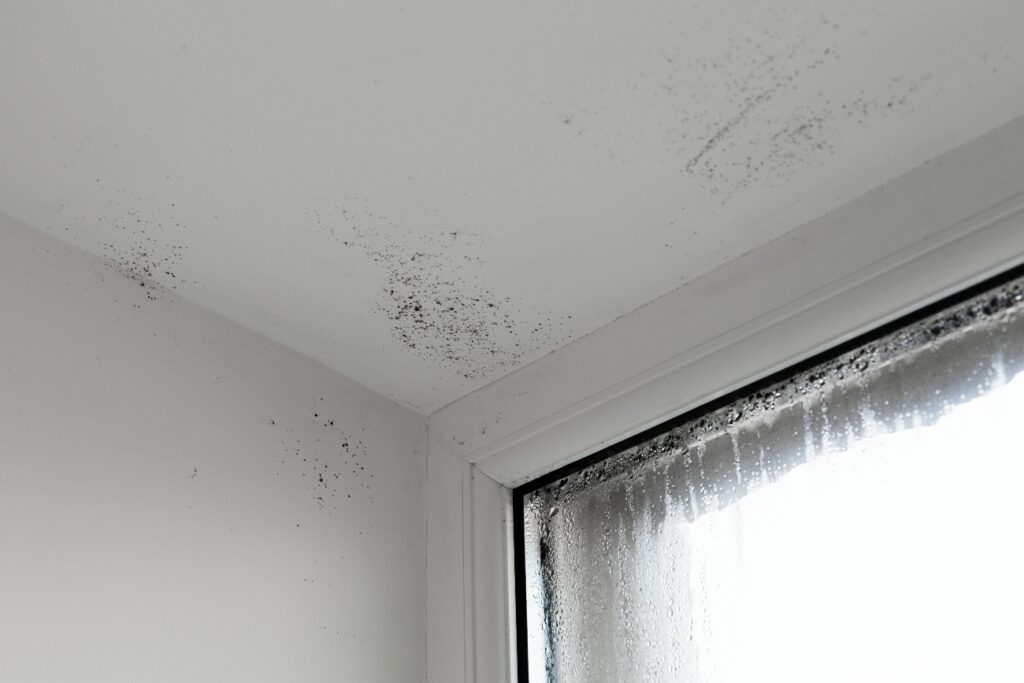
Black mould around windows is one of the most common problems homeowners notice in winter. It often starts with condensation on the glass, then small black spots appear on the frame, sealant or nearby plaster. Many people clean it off, only to find it comes back again a few weeks later.
In most cases, black mould around windows points to a moisture problem rather than a decorating problem. The good news is that once the cause is identified, the issue is usually much easier to control properly.
If mould is returning regularly, or if you are not sure whether the problem is condensation or a wider damp issue, you can book a damp survey in Surrey with Go2 Property Services.
Why does black mould grow around windows?
Windows are often the coldest surfaces in a room. When warm, moisture-filled air hits a colder surface, condensation forms. If that moisture sits there repeatedly, mould can begin to grow on frames, seals, reveals and nearby walls.
This is why black mould around windows often gets worse in bedrooms, bathrooms and living rooms during colder months. It is not always a sign of a major structural defect, but it should not be ignored either.
Common causes of black mould around windows
1. Condensation on cold surfaces
This is the most common cause. If your windows are regularly wet in the morning, the room is likely holding too much moisture or the surface temperature is too low. Window reveals and surrounding plaster can stay cold enough for repeated condensation, especially in older homes.
2. Poor ventilation
If moist air cannot escape, it builds up indoors. Everyday activities such as showering, cooking, drying clothes and even breathing all add moisture to the air. Without extractor fans, trickle vents, open vents or regular airflow, that moisture has to go somewhere.
3. Cold walls and insulated weak points
Sometimes the issue is not the window itself but the wall around it. Cold window reveals, uninsulated solid walls and poorly performing external walls can all make condensation more likely. If the surrounding wall feels noticeably cold, this related guide may help: Cold Walls but No Visible Damp? What It Means and How to Fix It.
4. Furniture or blinds restricting airflow
Heavy curtains, closed blinds, window boards packed with items and furniture placed tightly against external walls can all reduce air movement. That can create small pockets of still, damp air around the window where mould thrives.
5. A wider damp problem
Although condensation is common, not every mould problem around a window is just condensation. Failed sealant, water ingress around frames, cracked render, bridging or wider damp issues can sometimes produce similar symptoms. This is one reason repeat mould should be assessed carefully if it keeps returning after cleaning.
What should you check first?
Start with the simplest pattern check. Ask yourself:
- Are the windows wet most mornings?
- Is the mould worst in winter?
- Is it mainly on the frame, sealant or reveal rather than low down on the wall?
- Does the room have limited airflow or no extraction?
- Does the wall around the window feel especially cold?
If the answer is yes to most of those, condensation is a likely cause. Go2’s related article Condensation, Mould and Your Walls: How to Stop Moisture Before It Becomes Damp is a useful next read.
How to stop black mould around windows coming back
Reduce indoor moisture
Use extractor fans when cooking and bathing. Avoid drying washing indoors where possible, or ventilate well if you must. Wipe down wet windows in the morning so moisture is not left sitting on frames and seals.

Improve airflow
Keep trickle vents open if your windows have them. Open windows briefly but regularly where practical. Leave some space around curtains, blinds and furniture so air can circulate around cold surfaces.
Keep surfaces warmer
A more even background temperature can help reduce condensation risk. In some homes, the deeper issue is the wall build-up rather than lifestyle alone. Where appropriate, improvements such as internal wall insulation can help reduce cold-surface risk and improve comfort.
Clean mould safely and monitor it
Cleaning visible mould matters, but cleaning alone is rarely the full answer. If you remove it and the black spotting returns in the same place, that usually means the underlying moisture pattern has not changed.
When should you book a survey?
You should think about booking a survey if:
- mould keeps coming back after cleaning
- the wall around the window is stained, bubbling or flaky
- you can see damp patches as well as mould
- the problem affects multiple rooms
- you are buying or selling a property and need clarity
A proper inspection helps separate simple condensation from penetrating damp, thermal bridging or more persistent building defects. You can also read Damp Survey Surrey: When to Book One and What You’ll Learn if you want to know what the process involves.
Do not ignore repeat mould
Black mould around windows is common, but common does not mean harmless. Left untreated, it can keep damaging decoration, make rooms smell musty and point to a moisture imbalance that affects wider parts of the property. If you are already seeing several symptoms, this checklist is useful: Signs of Damp in a House.
Need help with mould around windows in Surrey?
If mould around your windows keeps returning, Go2 Property Services can help identify whether the cause is condensation, cold surfaces or a broader damp issue. The right fix depends on diagnosis, not guesswork.
Book a damp survey in Surrey or explore Go2’s damp proofing services to learn more.
For broader guidance on condensation and mould, see the Centre for Sustainable Energy’s advice here: Condensation, damp and mould.